SIMTRUM's maskless lithography enables nanopatterning at will, without the need for slow and expensive photomask. This convenience is especially useful for research and rapid prototyping use. Our system compliments the existing benefits by bringing it to the desktop without any compromise in performance.
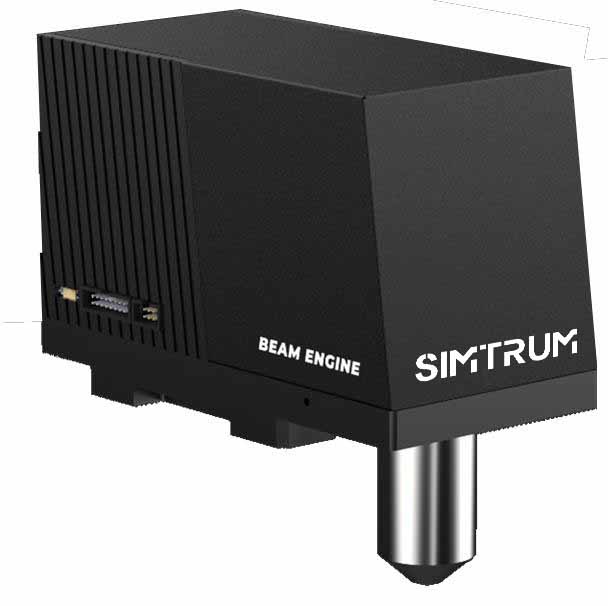
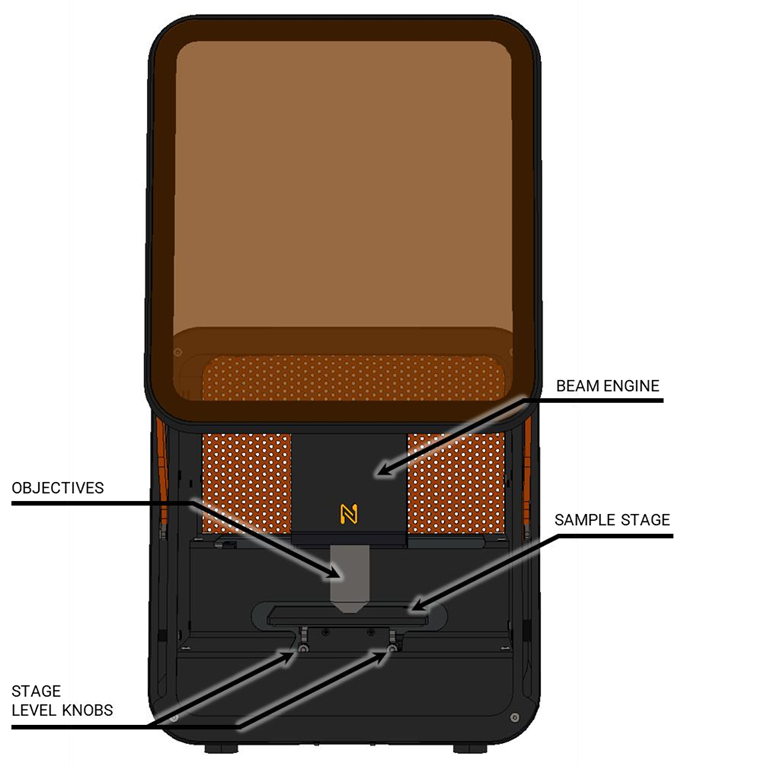
The Beam Engine focuses a UV laser beam into a diffraction-limited spot and scans the spot to expose any arbitrary pattern on a photoresist. To expose large wafers, precision steppers move the wafer and allows multiple exposures to be stitched. The Beam Engine is capable of producing features smaller than (CD) 0.5 µm across a 8” wafer.
* We have a new option for you now - the BEAM Lite. At a lower price, you can get the best-fitting product. Contact us for more details.
|

Request for Demo or Sample Measurement
Please contact us: info@simtrum.com
|
- Compact Full-featured maskless lithography, smaller than a desktop computer.
- Powerful Sub-micron resolution while exposes a writefield in less than two seconds.
- Ultrafast Autofocus Piezo actuators reach focus in less than a second when combined with our closed-looped focus optics.
- No-fuss Multilayer Semi-automatic alignment allows multilayer alignment to be completed within minutes.
Measurement Example
|
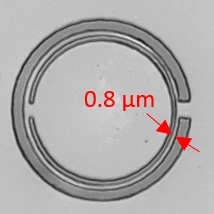
Split-ring resonator arrays. The distance on the right is 1.5 µm (arrow),
separation distance on the left is 2 µm. The outer ring is 80 µm across.
|

Array of resist micropatterns on silicon substrate. Each cell is 50 ✕ 63 µm,
with 3 µm spacing between adjacent patterns. Resist used: AZ5214E
|
|
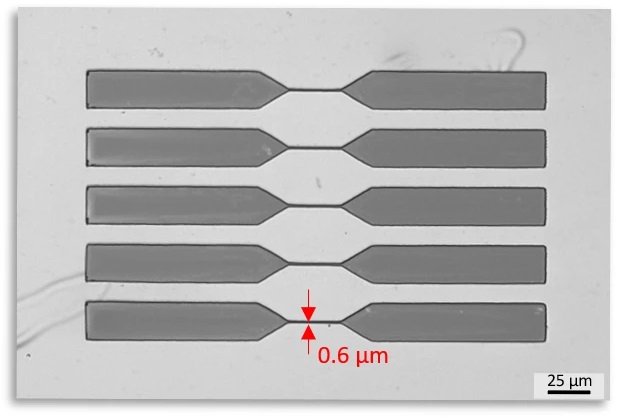
0.8 µm tapered middle section with 20 ✕ 90 µm contact pads on the side.
Resist used: AZ5214E
|
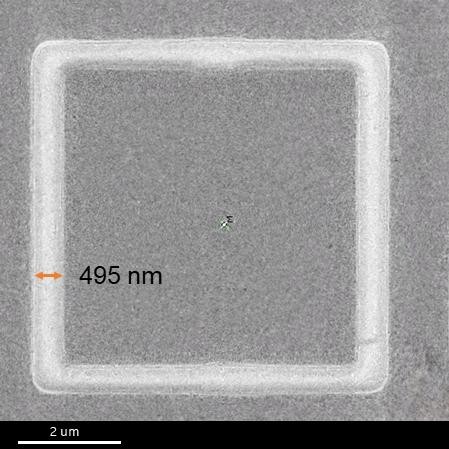
Square with 500 nm linewidth
Resist: KL5302
|
|
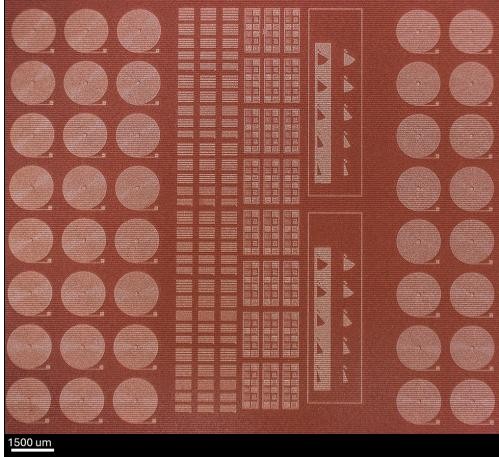
Microcoils and other patterns at 2 μm linewidth
Resist: 5 μm dry film
|
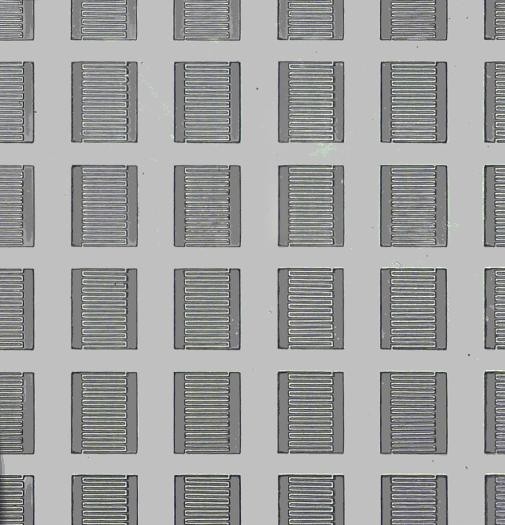
Interdigitated Capacitors (IDCs) with 2 µm fingers.
Resist used: AZ5214E
|
Software Features

- The included software makes quick work of any patterning job; just load, align and expose. Navigation is similar to CNC systems.
-
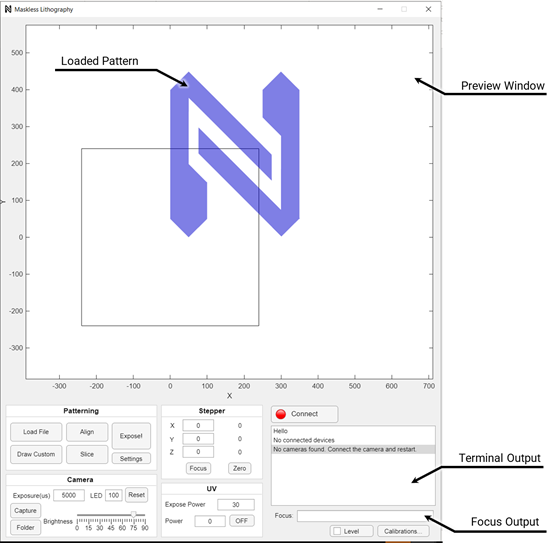
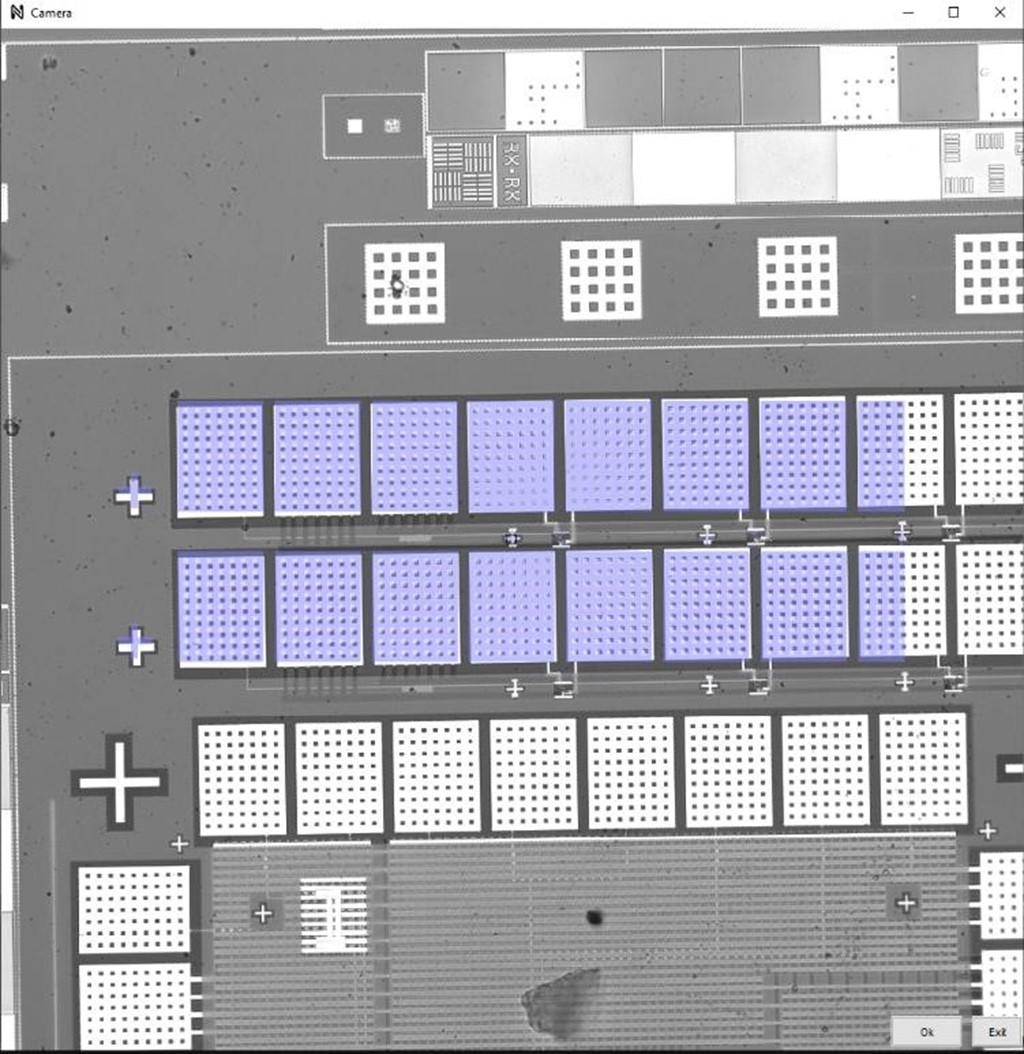
- During multilayer exposures, the GDS pattern is overlaid for visualization. The control GUI (left window) has a minimap of the loaded GDS that allows navigation to any area on the wafer with 1-click.
|
Xplorer Main Window
|
|
Camera Window
|
|
Acts as a minimap of the entire sample stage. Loaded patterns and exposed areas can be viewed. The black bos shows the regin that the BEAM ENGINE is currently at.
The live video stream on the camera window also corresponds to the same area.
|
|
The camera window shows a live stream of what the BEAM ENGINE is looking at.
The camera window also plays an important role during alignment, where the chosen alignment features appear overlaid on the amera stream. |
|
Patterning Processing
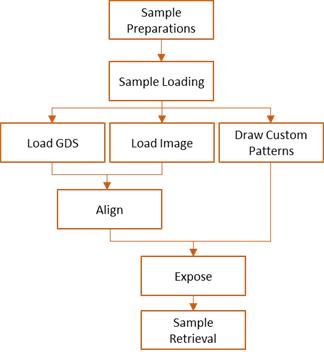
SIMTRUM BEAM was desinged so that the least number of steps are necessary to do a full exposure. Depending on the complexity of the patteming job, it is possible to load, align and expose a pattern onto a wafer in under 3 minutes. the flow of the entire patterning process is as shown below:
|
|
|
Product Upgrade
- DMD replaces laser galvanometers
- Interchangeable lens design (0.5 μm resolution or 200 mm²/min)
- True 8-bit grayscale lithography for advanced 2.5D and 3D microstructure fabrication
- Single writefield exposures as fast as 250 ms
- Gradient stitching supports a maximum overlap rate of 100%
- Low maintenance: Solid-state architecture reduces moving parts and wear. 80% reduction in required calibrations, minimizing downtime and maintenance costs
|
|
Specifications
| Product Model |
LL-LW-405-4-0.8* |
LL-LW-405-6-0.8* |
| Repeatability |
0.1 μm |
| Autofocus |
Piezo-actuated; fast and precise (20 nm) focus
Compatible with most transparent substrates |
| Wafer Alignment |
Automatic Wafer Alignment |
| Topside only |
Topside and buttom (optional) |
| Maximum Writing Area |
106×106 mm |
150×150 mm (8”optional) |
| Maximum Sample Size |
130 mm ✕ 130 mm ( 5”compatible) |
155 mm ✕ 155 mm ( 6”compatible) |
| Sample Mounting |
Friction mount (optional: porous vaccum chuck) |
| Weight |
20 kg |
27 kg |
| System Size |
330×310×340 mm |
342×385×338 mm |
| Objectives |
|
50×
LL-LW-50 |
20×*
LL-LW-20 |
10×*
LL-LW-10 |
5×
LL-LW-5 |
| Minumum Linewidth (μm) |
0.5 |
0.8 |
1.5 |
3 |
| Patterning Speed (mm2/min) |
3 |
15 |
60 |
200 |
| Exposure Wavelength (nm) |
405 nm (365/385 nm optional)
Software-selectable Dual Wavelength (optional) |
| Grayscale |
8-bit (16-bit optional) |
| Software |
Accepted File Formats |
.bmp, .png, .tiff, .dxf, .gds
Patterns can directly be drawn in software |
| Patterning |
Beam Xplorer |
| Drawing |
KLayout (most powerful), AutoCAD |
*For LL-LW-405-4-0.8 and LL-LW-405-6-0.8 products, the standard configuration includes a 20× objective lens. For other objective lenses (e.g., 50×), please contact SIMTRUM.
*For the LL-LW-405-4-1.5 (cost-effective) product, a 10× objective lens is standard. For other objective lenses (e.g., 5×), please contact SIMTRUM.
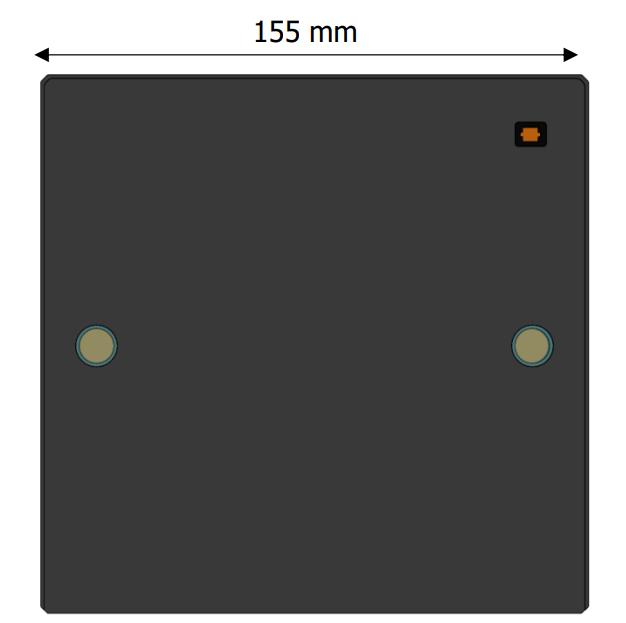
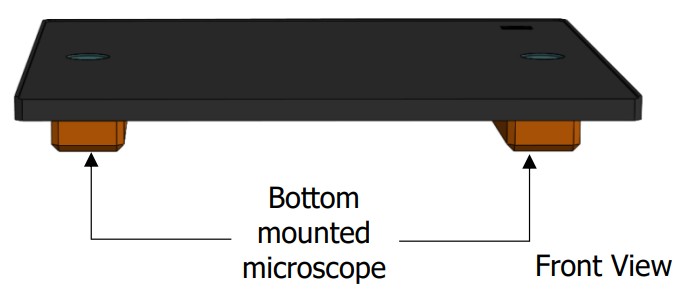
Backside Alignment for LL-LW-405-6-0.8 (Optional)
SIMTRUM's back-side alignment technology is achieved through two cameras and proprietary computer vision software. These two upward-facing cameras are arranged at a fixed distance, enabling them to capture alignment marks on the bottom surface of the wafer.
Each backside alignment system comes with a calibration wafer, and a self calibration software.
Note: backside alignment option must be purchased with system and is not available as an upgrade
|
|
| Camera |
5 MP Sony Sensor |
| Field of View |
2000 μm |
| Pixel Resolution |
1 μm |
| Illumination |
570 nm |
| Alignment Resolution |
0.1 μm |
| Alignment Accuracy |
<2 μm |
| Camera Separation |
Customizable from 80 to 135 mm |
| Compatibility |
Only for LL-LW-405-6-0.8 |
|
Front View
|
|
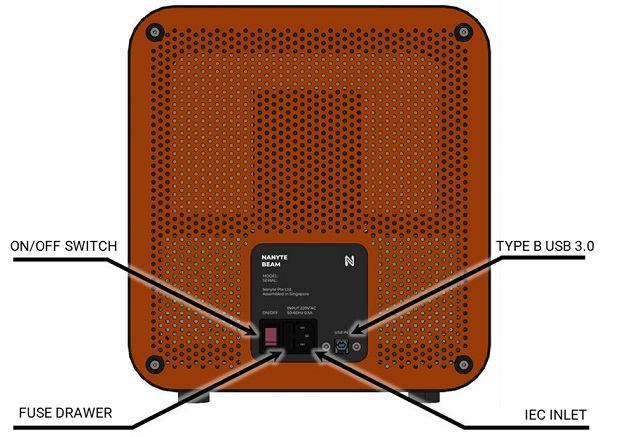
Back View
|
|
Modular Laser Head
Swappable optics minimizes downtime and increases upgradeability.
Customization options are available for different wavelengths and write
field sizes. Contact us info@simtrum.comfor more info.
|
System Requirements
Power
BEAM opeartes on 100-240 VAC 50-60j Hz. Line voltage and frequency are automatically sensed; therefore, no swithces are to be set. Check that the operating voltagein your area is compatible.
Location
● Indoor, dust free, near-non-conductive pollution (degree 2 of EN61010-1:2010)
● Tabletop vibration should be kept under VC-A (50 um/s)
● Cleanroom environment is optional (Vibration Reference link)
● Equipment must be shaded from indirect sunlight
● Relative humidity < 80% (no condensation)